
Research behind NAROVAC
NAROVAC's development is informed by scientific research on tick biology, vaccination and cattle health. This library brings together publications relevant to the vaccine's development, field evaluation and future use.
Publications are presented from newest to oldest. Each record links to the publisher's page or an approved downloadable copy.
See where field evaluation took place: experimental cattle sites and selection reasons.
Research Publications
Key publications supporting the development and evaluation of the NAROVAC anti-tick vaccine.
A decade of Spain–Uganda anti-tick vaccine collaboration (CSIC record)
Gortázar C, et al.
Collaboration history of the Spain–Uganda anti-tick vaccine programme. PDF indexed; see also the related journal version in the Uganda Journal of Agricultural Sciences.
CSIC Digital
Subolesin: two decades from discovery to tick vaccination
See publisher page for the full author list.
Review tracing Subolesin from discovery to application in tick vaccination, providing background to the antigen behind NAROVAC.
Expert Review of Vaccines
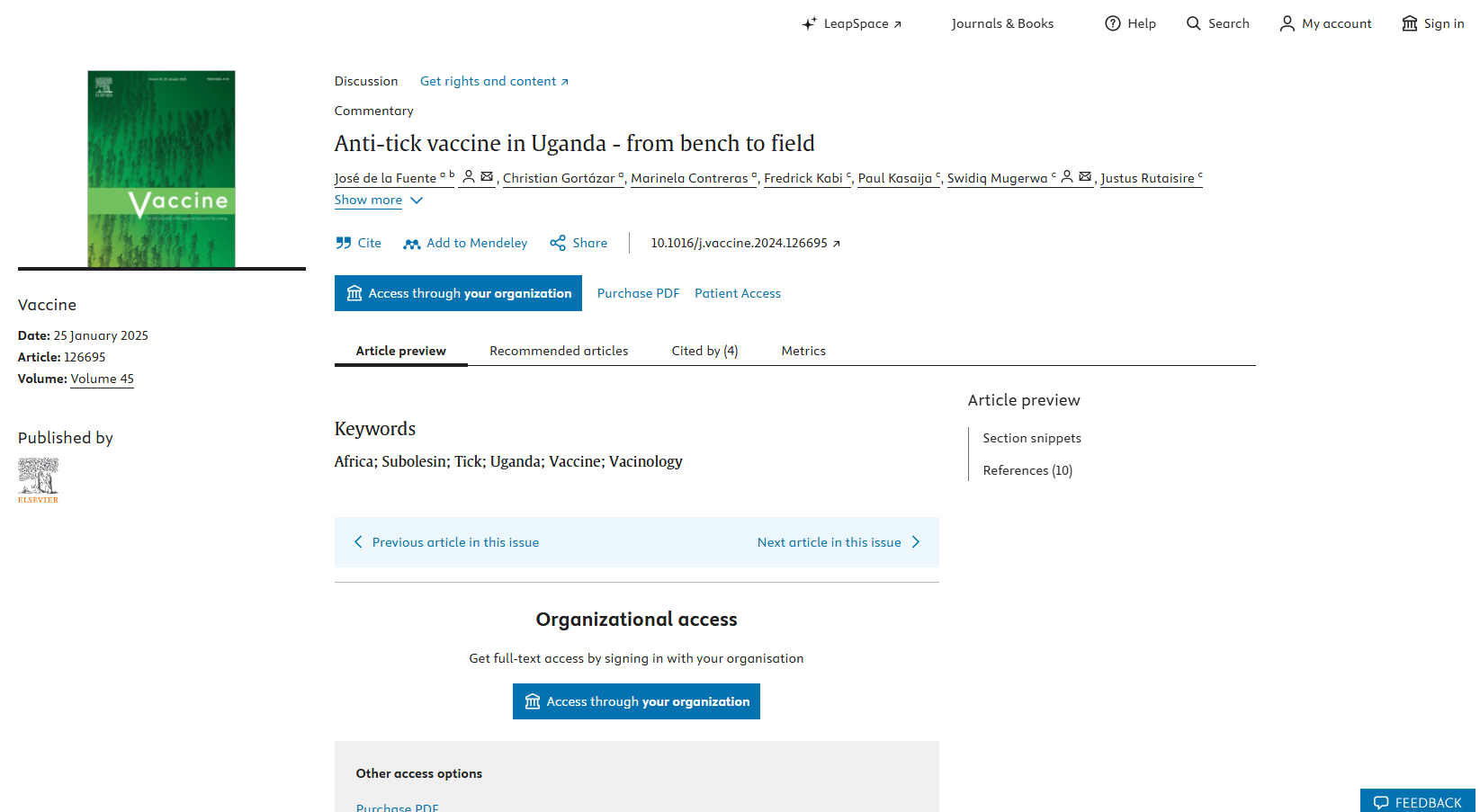
Anti-tick vaccine in Uganda — from bench to field
de la Fuente J, Gortázar C, Contreras M, Kabi F, Kasaija P, Mugerwa S, et al.
Traces the full journey of Uganda's anti-tick vaccine from laboratory bench through pen trials and multi-site field evaluation to regulatory approval, summarising the evidence behind the registered Subolesin-based vaccine and its relevance for Sub-Saharan Africa.
Vaccine
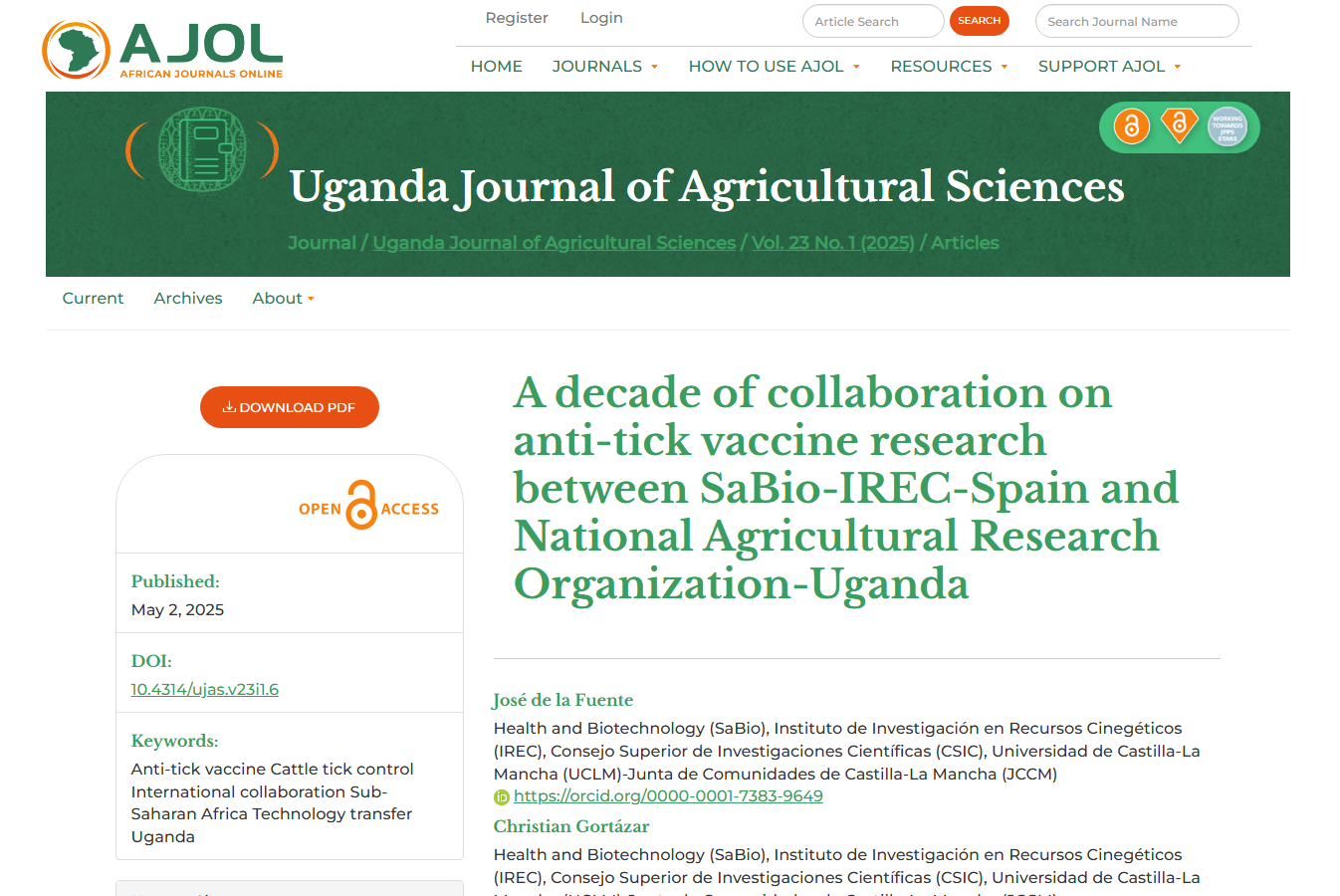
A decade of collaboration on anti-tick vaccine research between SaBio-IREC-Spain and NARO-Uganda
de la Fuente J, Gortázar C, Rutaisire J, Semakula J, Matovu M, Kasaija PD, et al.
Summarises ten years of collaboration from controlled pen trials through field trials to the successful transfer of vaccine production technology to Uganda, demonstrating how international cooperation addresses limited access to biotechnological products in Sub-Saharan Africa.
Uganda Journal of Agricultural Sciences
Evaluation of effectiveness and safety of Subolesin anti-tick vaccine in Ugandan multi-site field trial (PubMed record)
Kabi F, Contreras M, Semakula J, Sánchez-Sánchez M, Muñoz C, Mugerwa S, et al.
PubMed record for the primary multi-site field trial of the Rhipicephalus appendiculatus Subolesin vaccine in Uganda. See the publisher page for the full abstract, efficacy figures and safety findings.
npj Vaccines (PubMed record)
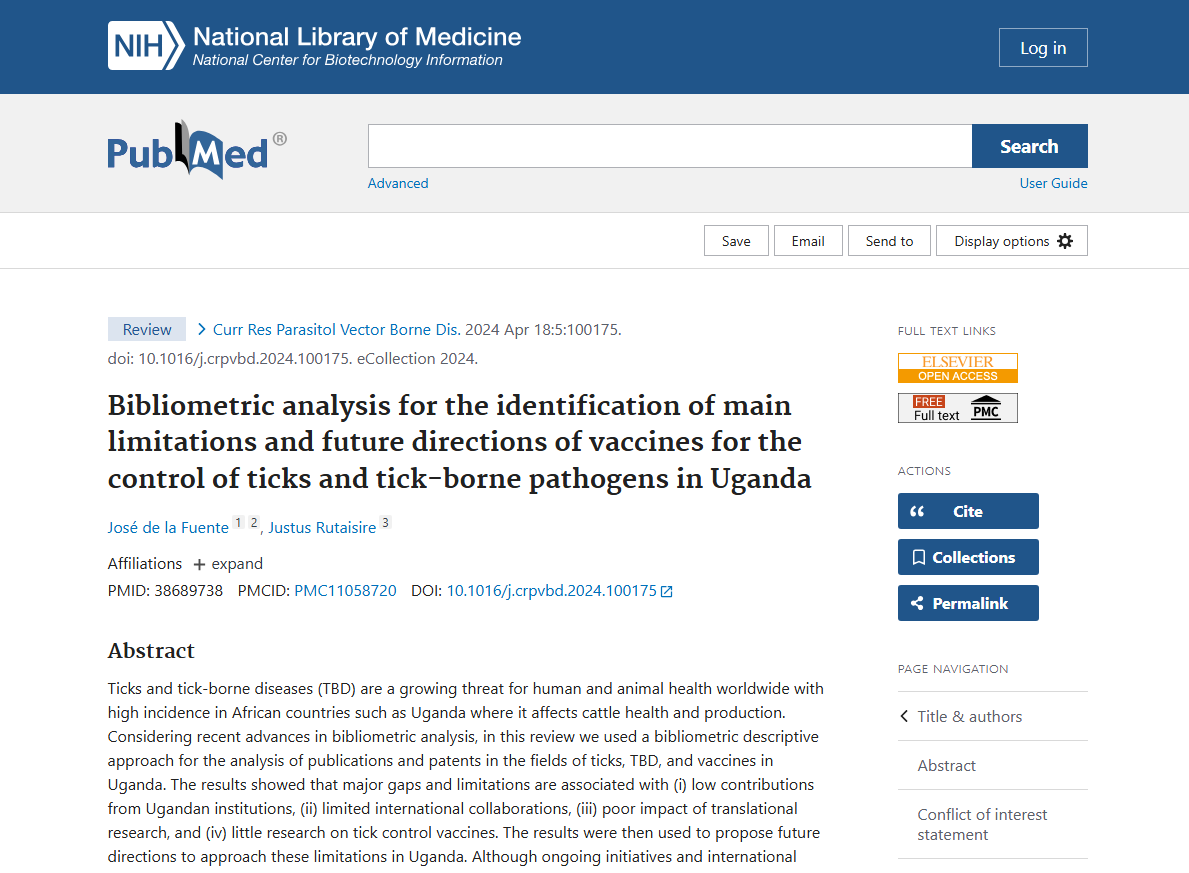
Bibliometric analysis for the identification of main limitations and future directions of vaccines for the control of ticks and tick-borne pathogens in Uganda
de la Fuente J, Rutaisire J.
A bibliometric review of tick, tick-borne disease and vaccine publications and patents relating to Uganda. It identifies gaps — low Ugandan institutional contribution, limited international collaboration and little tick-vaccine research — and proposes collaborative research and local vaccine production capacity as the way forward.
Current Research in Parasitology & Vector-Borne Diseases
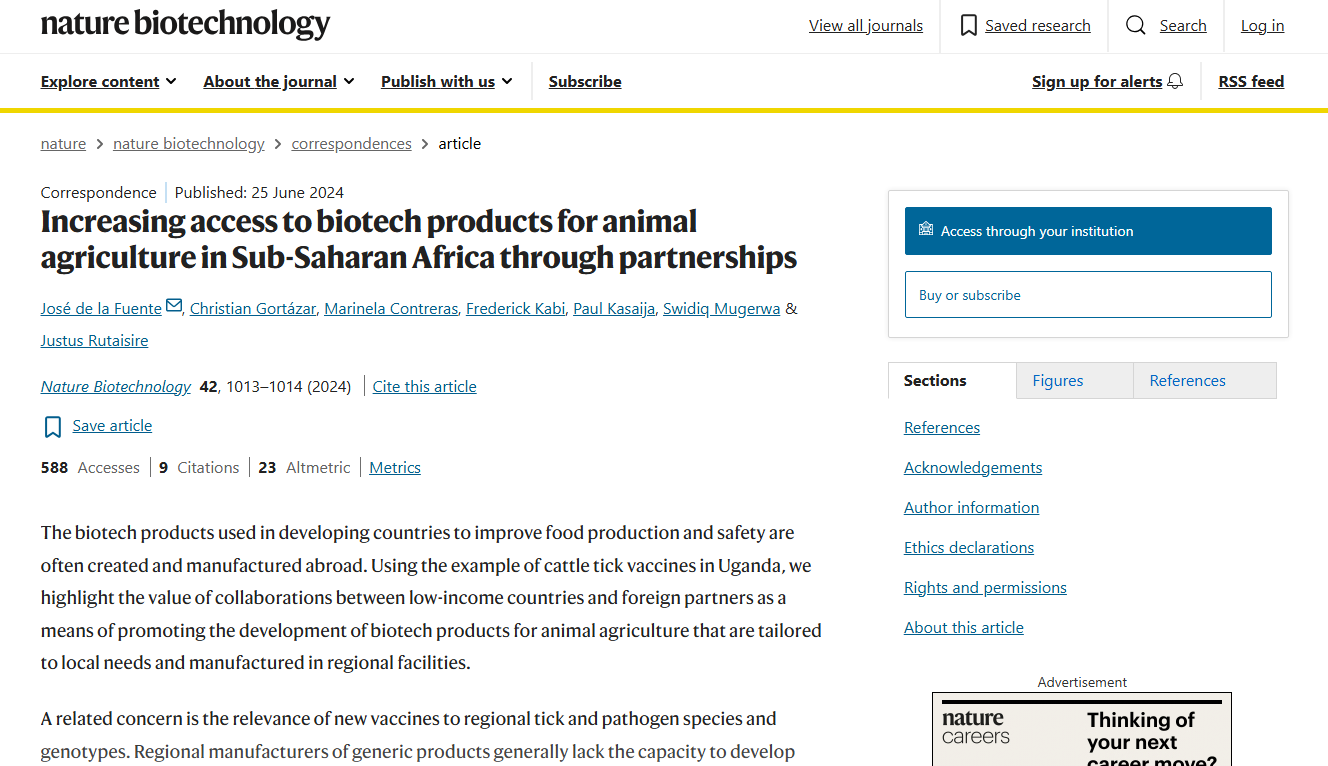
Increasing access to biotech products for animal agriculture in Sub-Saharan Africa through partnerships
de la Fuente J, Gortázar C, Contreras M, et al.
Highlights the value of collaborations between low-income countries and foreign partners in promoting the development of biotech products for animal agriculture tailored to local needs and manufactured in regional facilities.
Nature Biotechnology
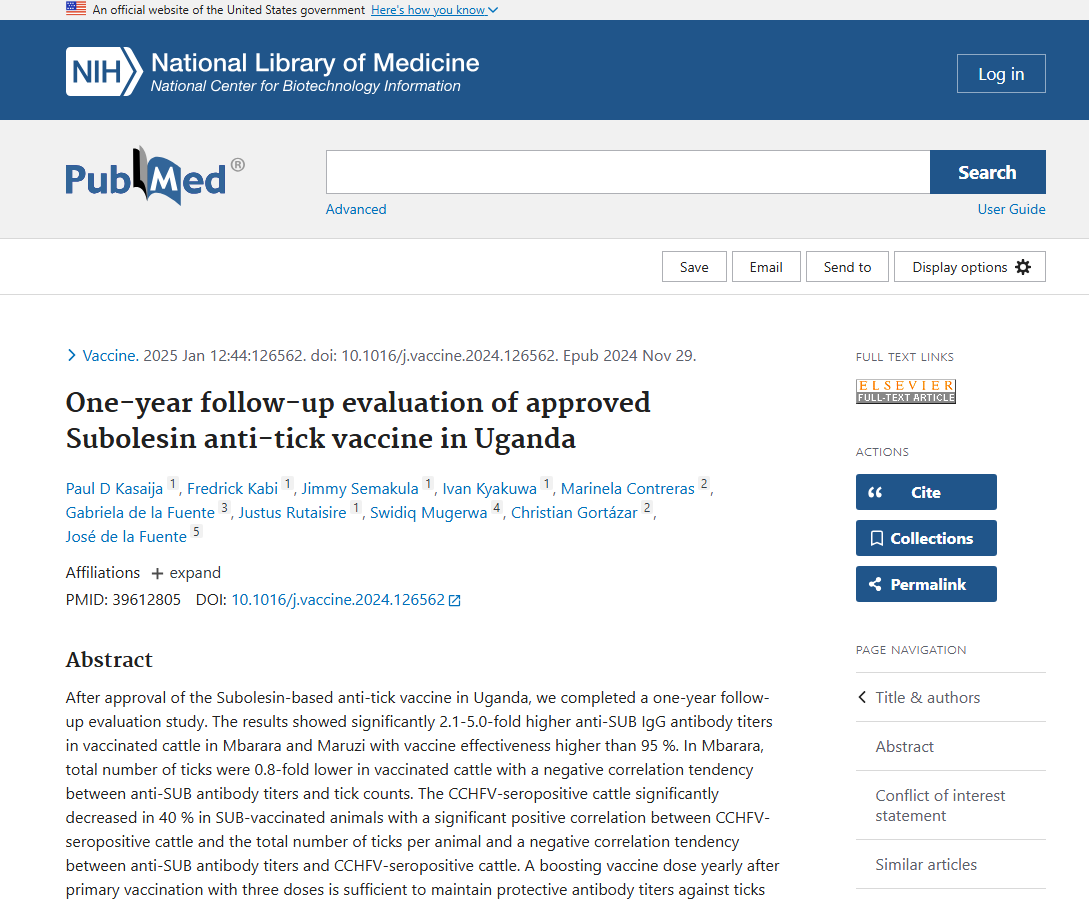
One-year follow-up evaluation of approved Subolesin anti-tick vaccine in Uganda
Kasaija PD, Kabi F, Semakula J, Kyakuwa I, Contreras M, de la Fuente G, et al.
A one-year follow-up after vaccine approval showed significantly higher anti-SUB IgG antibody titers in vaccinated cattle with effectiveness higher than 95%. A yearly boosting dose after primary vaccination with three doses is sufficient to maintain protective antibody titers.
Vaccine
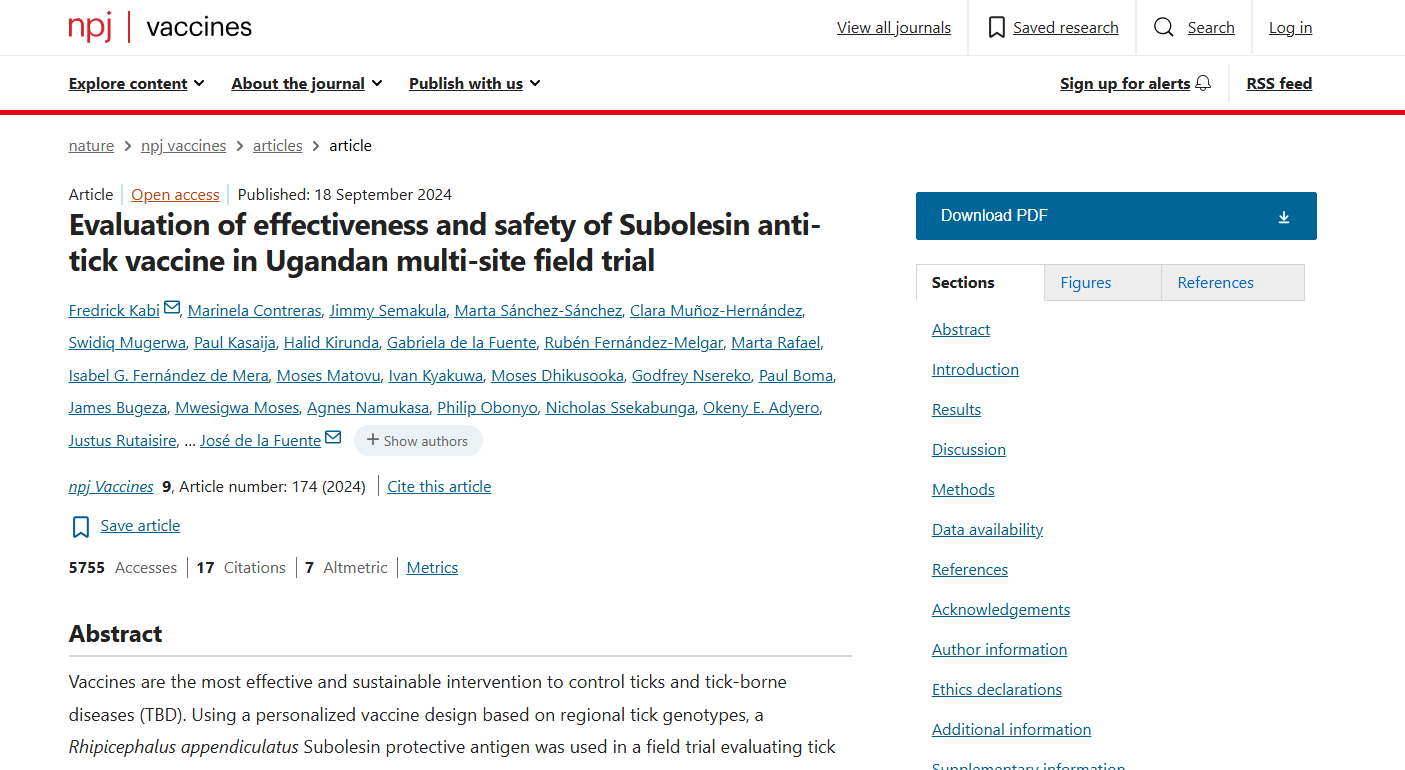
Evaluation of effectiveness and safety of Subolesin anti-tick vaccine in Ugandan multi-site field trial
Kabi F, Contreras M, Semakula J, Sánchez-Sánchez M, Muñoz C, Mugerwa S, et al.
A multi-site, double-blinded, randomized, controlled field trial evaluated the Subolesin-based vaccine across different Ugandan agroecological zones. Results showed vaccine effectiveness between 93.2% and 61.4%, with total integrated efficacy/effectiveness estimated at 98.8%. The vaccine was safe and protective against multiple cattle tick infestations under field conditions. Also indexed at https://pubmed.ncbi.nlm.nih.gov/39294184/.
npj Vaccines
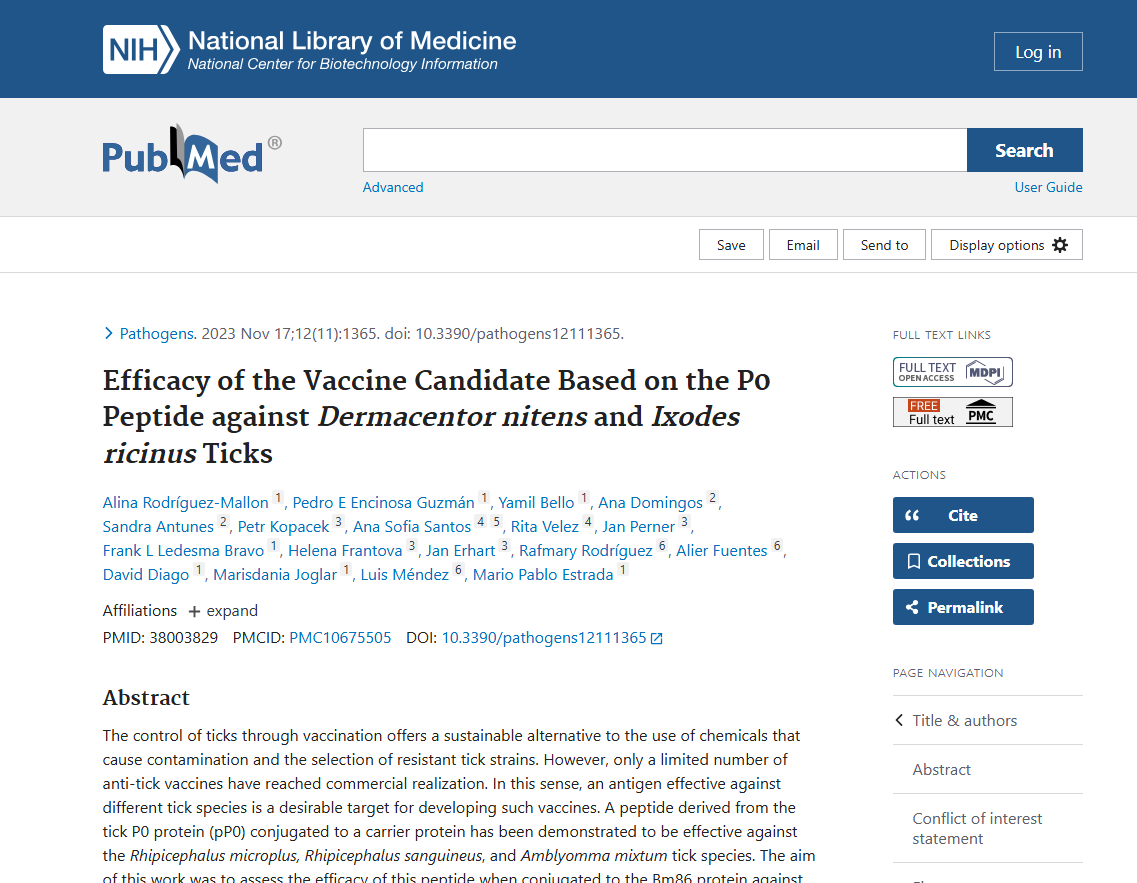
Efficacy of the Vaccine Candidate Based on the P0 Peptide against Dermacentor nitens and Ixodes ricinus Ticks
Mendoza-Martínez N, Alonso-Díaz MA, et al.
Assessed the efficacy of a peptide derived from the tick P0 protein conjugated to Bm86 against Dermacentor nitens and Ixodes ricinus ticks, showing efficacies of 55% and 63% respectively, demonstrating promising potential as a broad-spectrum anti-tick vaccine.
Vaccines
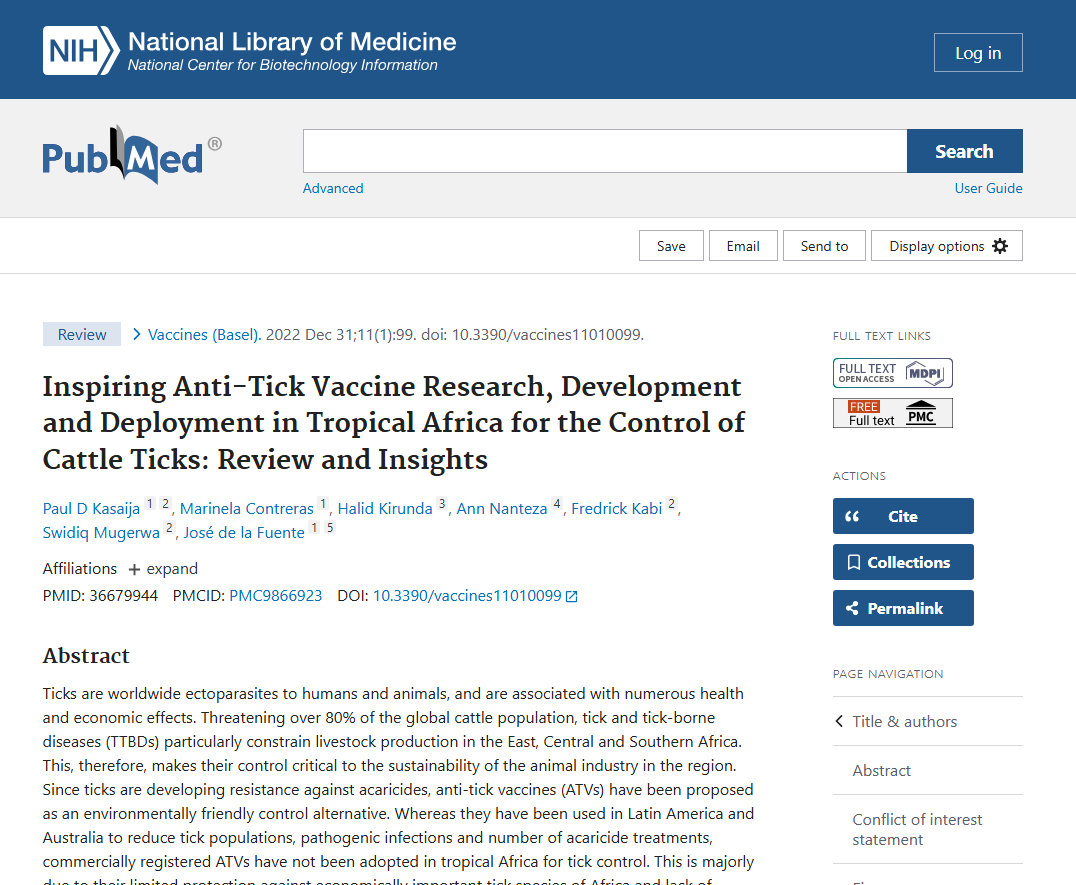
Inspiring Anti-Tick Vaccine Research, Development and Deployment in Sub-Saharan Africa
Kasaija PD, Contreras M, Kirunda H, Nanteza A, Kabi F, Mugerwa S, et al.
Advocates for boosting anti-tick vaccine research, development and deployment in sub-Saharan Africa, presenting logical considerations guiding antigen identification and outlining how biotechnology tools can be used to achieve higher efficacy.
Vaccines
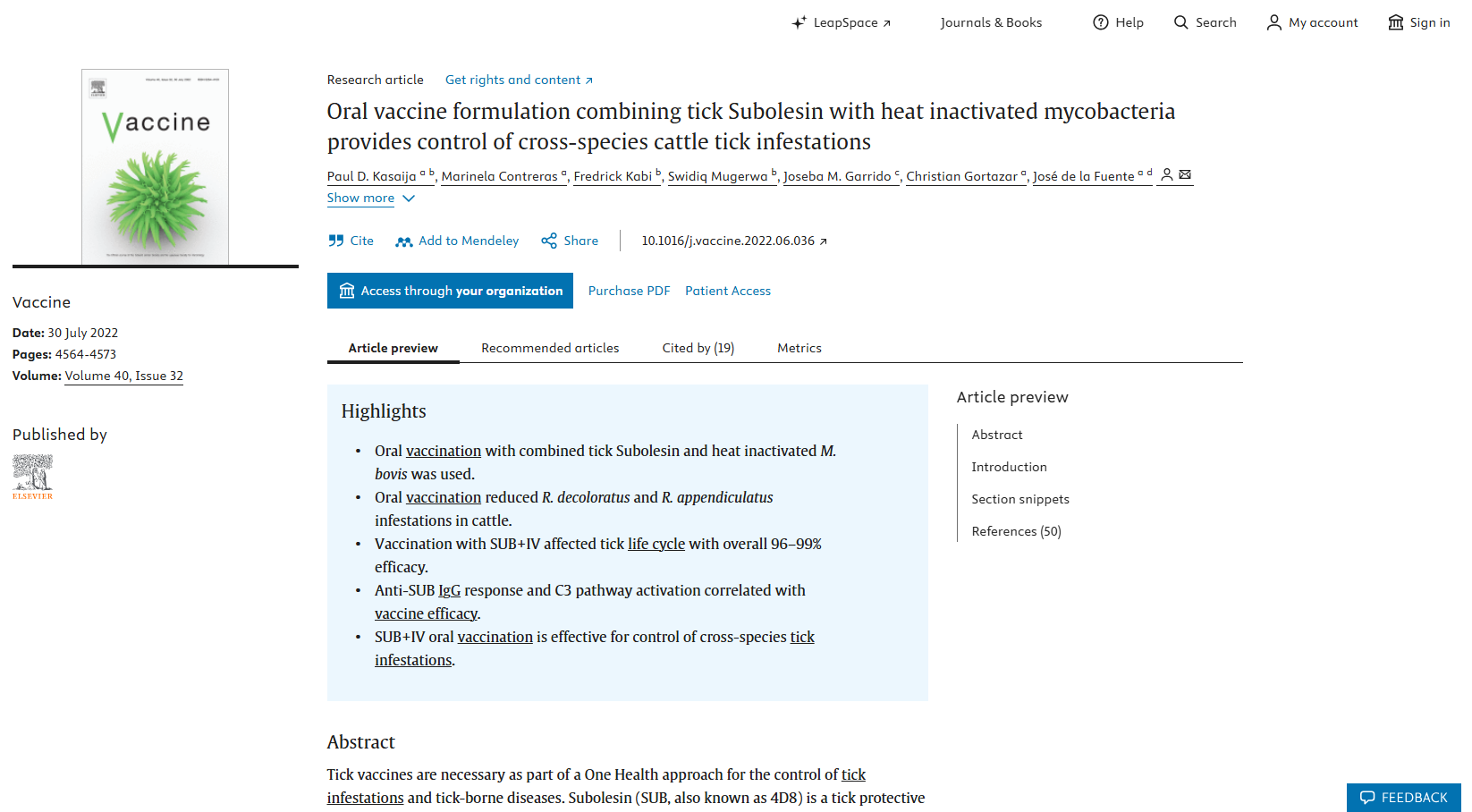
Oral vaccine formulation combining tick Subolesin with heat inactivated mycobacteria provides control of cross-species cattle tick infestations
Kasaija PD, Contreras M, Kabi F, Mugerwa S, Garrido JM, Gortázar C, de la Fuente J.
Demonstrated that oral immunization with a formulation combining Rhipicephalus decoloratus Subolesin with heat-inactivated Mycobacterium bovis resulted in effective control of cattle tick infestations (efficacy 71–99%) through activation of multiple immune mechanisms. Publisher abstract also at https://www.sciencedirect.com/science/article/abs/pii/S0264410X22008040.
Vaccine

Monitoring the Subolesin Vaccine Field Trial for Safer Control of Cattle Ticks Amidst Increasing Acaricide Resistance in Uganda
Kabi F, Dhikusooka M, Matovu M, Mugerwa S, Kasaija PD, Emudong P, et al.
Describes the design and implementation of the first controlled field trial of the Subolesin-based anti-tick vaccine in Uganda, approved by UNCST and NDA, across five farms in different agroecological zones.
Vaccines
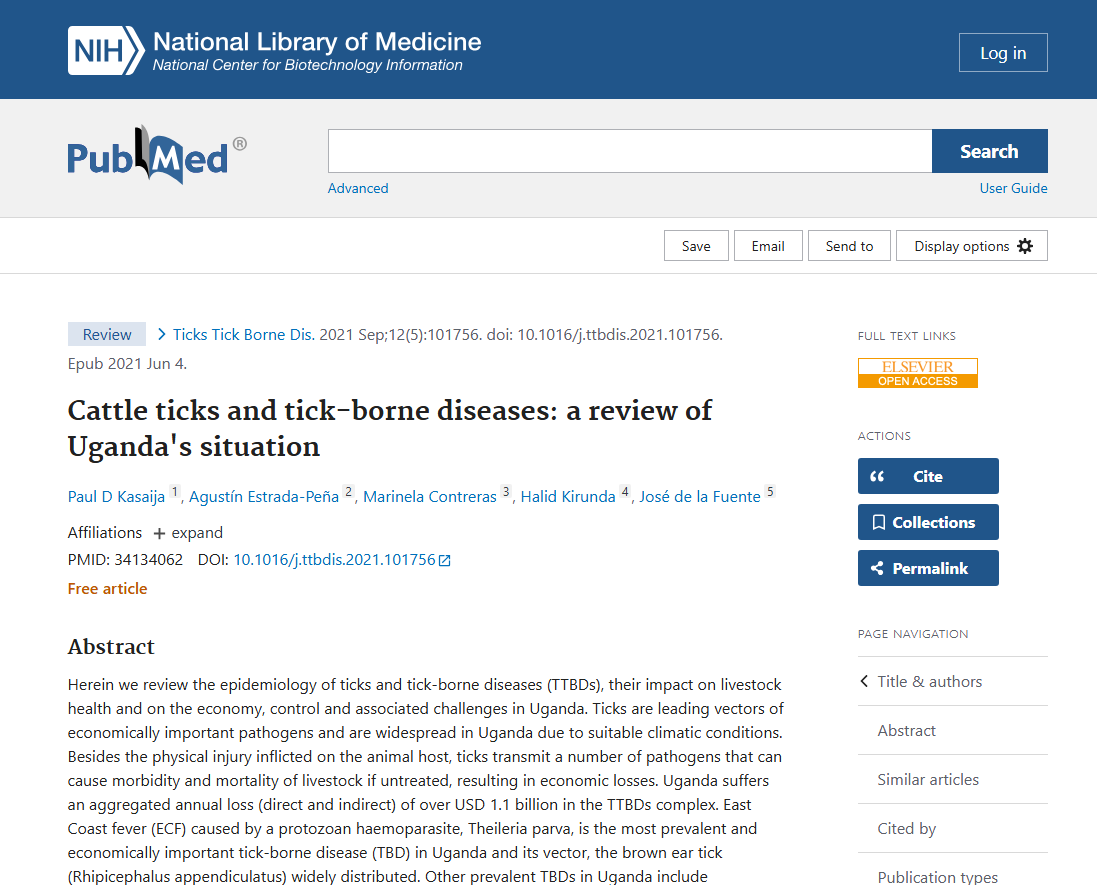
Cattle ticks and tick-borne diseases: a review of Uganda's situation
Kasaija PD, Estrada-Peña A, Contreras M, Kirunda H, de la Fuente J.
Reviews the epidemiology of ticks and tick-borne diseases in Uganda, their estimated cost of over USD 1.1 billion annually, the role of agro-ecological zones and the growing challenge of acaricide resistance — setting out the case for vaccines as a more sustainable intervention.
Ticks and Tick-borne Diseases
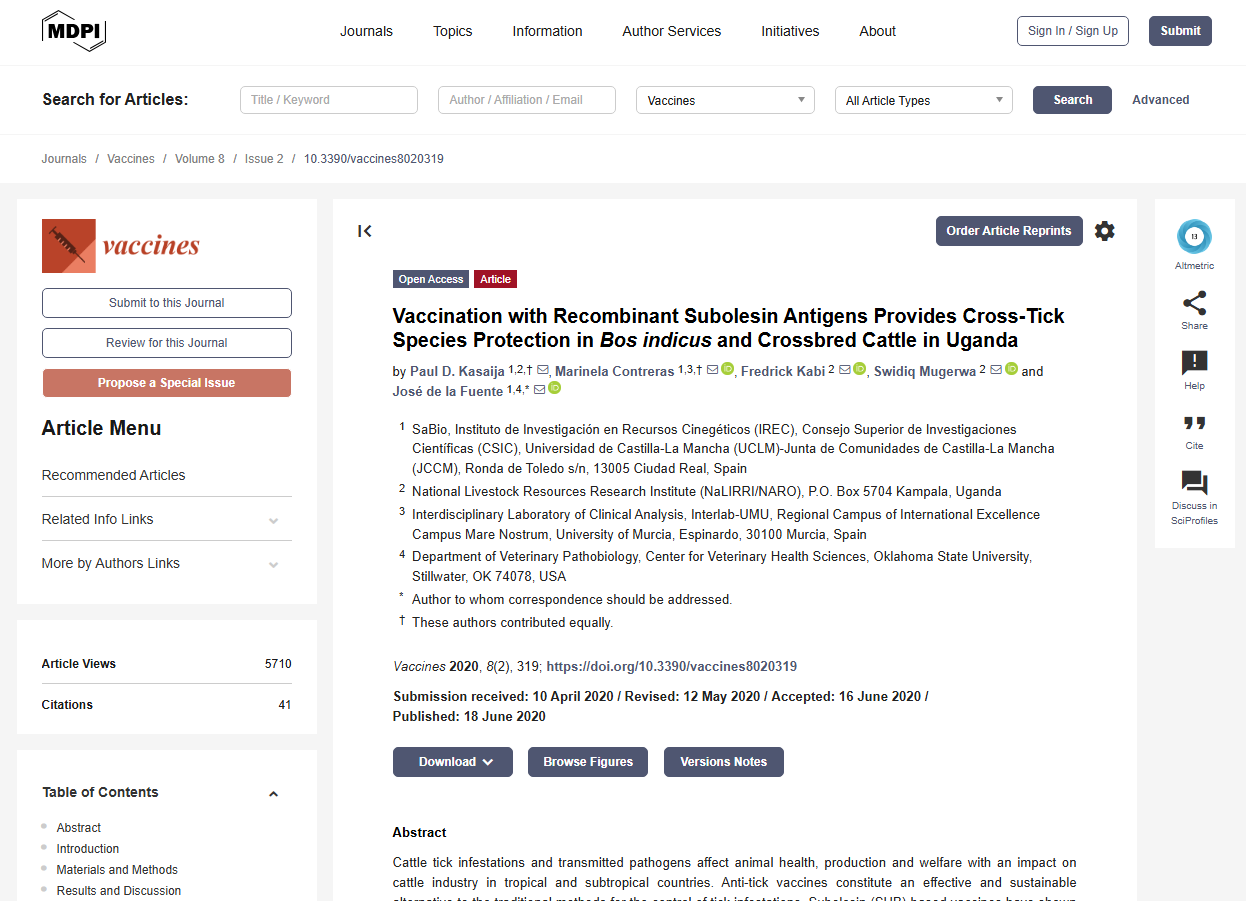
Vaccination with Recombinant Subolesin Antigens Provides Cross-Tick Species Protection in Bos indicus and Crossbred Cattle in Uganda
Kasaija PD, Contreras M, Kabi F, Mugerwa S, de la Fuente J.
Evaluated the protective capacity of recombinant Subolesin-based vaccines against multiple tick species in Ugandan cattle. Results demonstrated cross-species protection with vaccine efficacy ranging from 47% to 94%. Also indexed at https://pubmed.ncbi.nlm.nih.gov/32570925/.
Vaccines
Multidisciplinary research programme on cattle health in Uganda (background)
See publisher page for the full author list.
Related IREC–NARO research programme background to the anti-tick vaccine work, rather than branded-product coverage.
PMC (background)
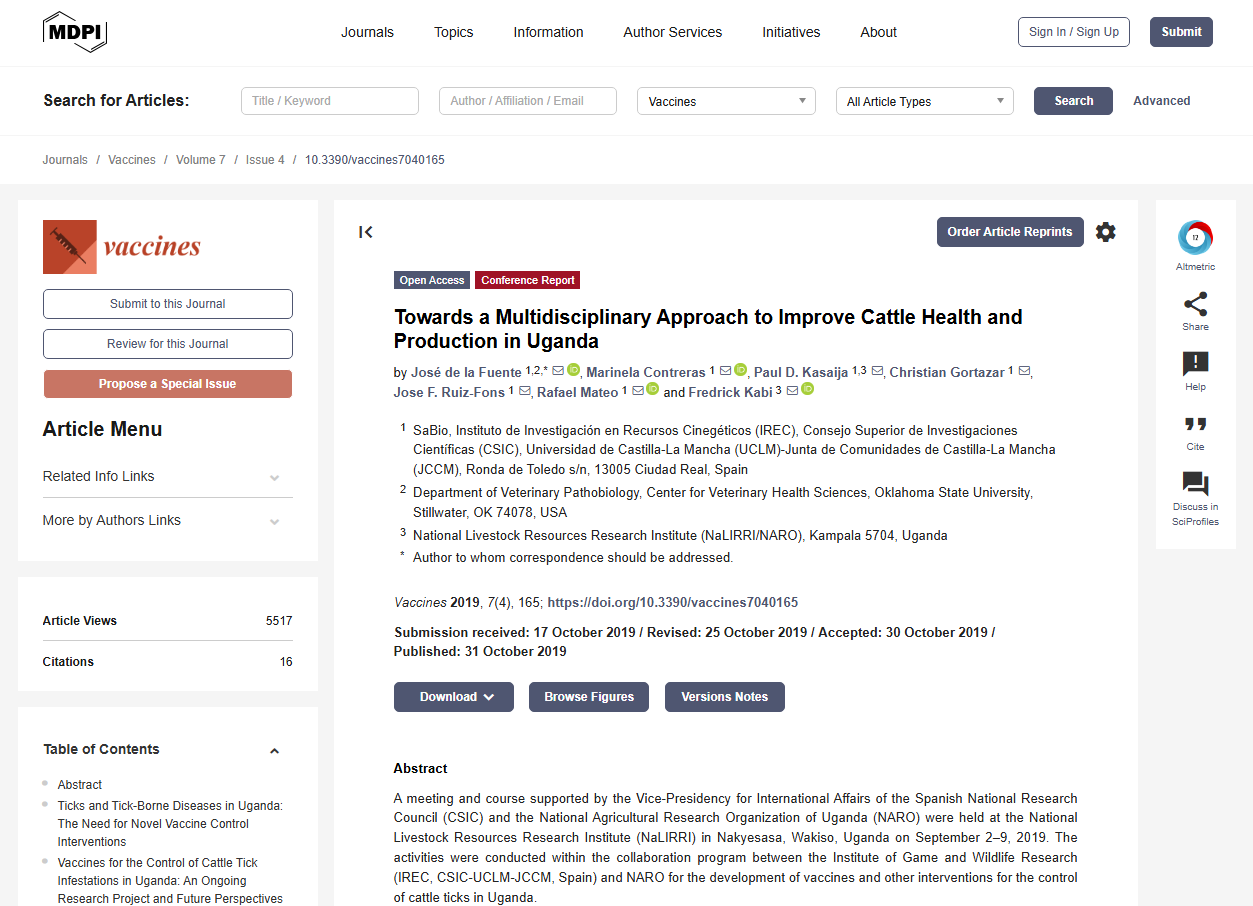
Towards a Multidisciplinary Approach to Improve Cattle Health and Production in Uganda
de la Fuente J, Kariithi HM, Kabi F, et al.
Describes the collaboration between NARO and IREC to establish a production facility for a cattle tick vaccine using Subolesin-based antigens from local tick species in Uganda.
Vaccines
Control of tick infestations and pathogen prevalence in cattle and sheep farms vaccinated with the recombinant Subolesin-Major Surface Protein 1a chimeric antigen
Torina A, Moreno-Cid JA, Blanda V, Fernández de Mera IG, Pérez de la Lastra JM, Scimeca S, et al.
Evaluated the recombinant Subolesin-MSP1a chimeric antigen in cattle and sheep farms, demonstrating control of tick infestations and reduction in pathogen prevalence under field conditions.
Parasites & Vectors

Targeting arthropod subolesin/akirin for the development of a universal vaccine for control of vector infestations and pathogen transmission
de la Fuente J, Moreno-Cid JA, Canales M, Villar M, Pérez de la Lastra JM, Kocan KM, et al.
Seminal paper proposing Subolesin/akirin as a universal vaccine antigen for the control of ectoparasite infestations and pathogen transmission, establishing the scientific foundation for subsequent Subolesin-based vaccine development including NAROVAC.
Veterinary Parasitology
Interested in NAROVAC research or collaboration?
Contact the research team for questions about publications, scientific collaboration or institutional partnerships.
Make a Research EnquiryRegulation of Our Research
NAROVAC research and field evaluation are conducted under the oversight of the following regulatory and institutional bodies: